
Technology
AI Exposure and Chatting up the Future
If the lamplighters at dusk in 1878, who made their way ceremoniously along Rue des Trois Chandelles (Duncan Street), accompanied by a boy toting a ladder and a pail of whale oil, and another ringing a brass bell could see the CBTT, the magisterial coastal tow…
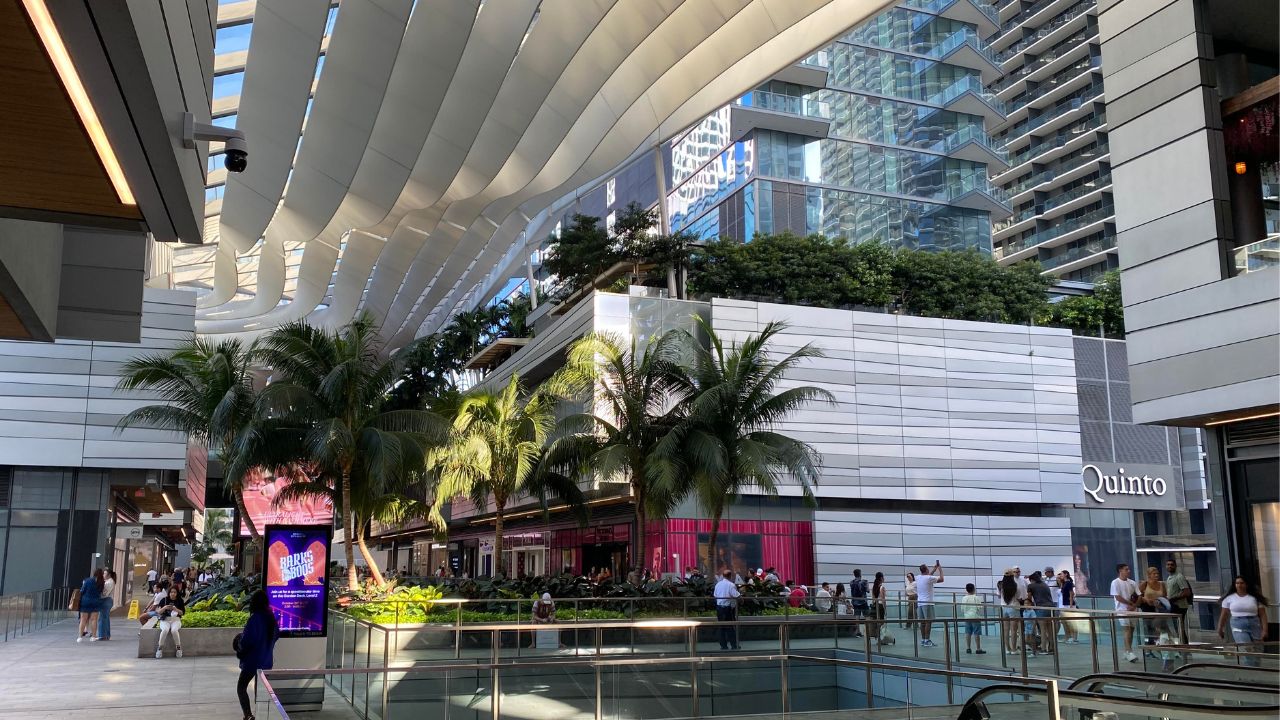
If the lamplighters at dusk in 1878, who made their way ceremoniously along Rue des Trois Chandelles (Duncan Street), accompanied by a boy toting a ladder and a pail of whale oil, and another ringing a brass bell could see the CBTT, the magisterial coastal towers of the International Waterfront Centre, the Hyatt Regency, Furness House, the Radisson, and the POS Ferry Terminal, they would think the prosperity all around them was unimaginable. And if we stand at the portal of the Age of Artificial Intelligence (AI) and fast-forward one hundred years from now, the opulence and artificial life everywhere in Trinidad and Tobago would feel just as unthinkable.
After emancipation, Trinidad was ripe with contrast. The economic ruin brought on by the collapse of enslaved labour drove the French Creoles or “petite noblesse” to settle in those parts of POS that came to be known as the “French Shores.” The wooden mansions they built along Besson Street, Rue d’Eglise (Nelson Street), Rue de Sainte Anne (Charlotte Street), and Rue de la Place (George Street) gave the city an air not dissimilar to Pointe-à-Pitre in the French Antilles.
Lamplighters are no longer fashionable. Today, sensors turn on LEDs along Hollis Avenue in Connected Arima, where candle flies flicker through groves of doux-doux mango trees. During the infosphere revolution life will be coloured by the entanglement of agency and socio-political structure. “Inforgs” will develop a habitus emblematic of their position in the infosphere. New types of cultural capital will provide the means for non-economic forms of domination and hierarchy. Classes will distinguish themselves through hybrid life.
Nascent artificial e-nvironments will require us to change our self-perceptions and roles concerning reality, and how we navigate our natural and synthetic interactions. The effect of the AI transition on the global labour market suggests that many jobs will be replaced, and others complimented. Globally, forty per cent of the workforce is exposed to AI. In advanced economies, nearly sixty per cent may be impacted by AI. About half of the exposed may benefit from AI integration. For the remainder, AI assemblages may execute key tasks. The effect would be lower labour demand and wages as jobs are erased from economic history.
In emerging markets and low-income economies, AI exposure approximates forty per cent and twenty-six per cent respectively. This suggests that these countries will experience fewer immediate disruptions from AI as they simply do not have the infrastructure or skilled workforce to harness the benefits of AI assemblages. The risk here is that over time AI could worsen global inequality.
Economic globalization is both a slippery and perilous expression. Slippery because it has many subtexts. Perilous because it is used as a shibboleth or simplistic justification for the unending expansion of unregulated capitalist relations into every facet of human life. It is estimated that AI could contribute an estimated $4.4 trillion annually to the global economy by enhancing productivity, restructuring supply chains, and creating new opportunities for cross-border transactions. However, AI may affect the world economy unequally, and increase inequality.
Before long AI may fuel volatility in the global economy and amplify the North-South divide. Over the next five years, in high-income economies, productivity will improve by “chatting up” product designs for “attention markets” by using AI to generate responses to user input conversationally and to generate real-time insights and information from anywhere on the web. In low-income economies, there may be the old reliance on traditional hyperlink processes which may not provide the edgy outputs needed to compete in the “attention markets” and to amplify our capabilities like never before.
Liberal thinkers have nurtured our faith in reasoned agency and the capabilities of the rational individual. However, independent rational agents are rare. Behavioural economists have demonstrated that most human decisions are based on heuristic shortcuts and emotional intelligence, rather than rational analysis. Moreover, humans rarely think for themselves. Rather, we believe in collectives.
Most of our views are shaped by groupthink rather than individual rationality, and we hold on to these views because of fraternity. No one is enough in the Silicon Age. No one can know everything. We each know less and less as more and more ideas push back the edges of the darkness. Approaching the AI horizon as a collective will be useful for Latin America and the Caribbean (LAC).
A basic question in biology is how collective systems function. There are more ants on Earth than silicon chips and sensors. Ants use algorithms, and the colony is a computing device. How can a colony decide between two food sources, one of which is closer? Along the path to the closer food source, they lay a denser chemical trail which the other ants follow. This positive feedback amplifies the information. The negative feedback is the decay of the chemical trail.
The fragile balance of the two feedback mechanisms allows the colony to collectively decide which source is closest, and exploit that source, even though none of these individual ants have that knowledge. Ants use relatively simple heuristics, and LAC can learn a lot from them as we shape our e-commerce strategies and build our AI architectures.
, Fazal Ali · 01 February 2025 -
Next entry · Technology
AI and the Politics of Agriculture
By 2050 we must increase world food production. FarmBeats uses AI, Edge, and IoT for agriculture. The digital architectures of FarmBeats is a mesh of long-range TV frequencies to connect with and capture data from solar powered sensors in the fields.