
Technology
Algorithmic Bureaucracy and the Information Empires
The new “Information Empires” are not unlike those that bedevilled Montezuma, Emperor of the Aztecs, and Hyarima, the Nepuyo Cacique.
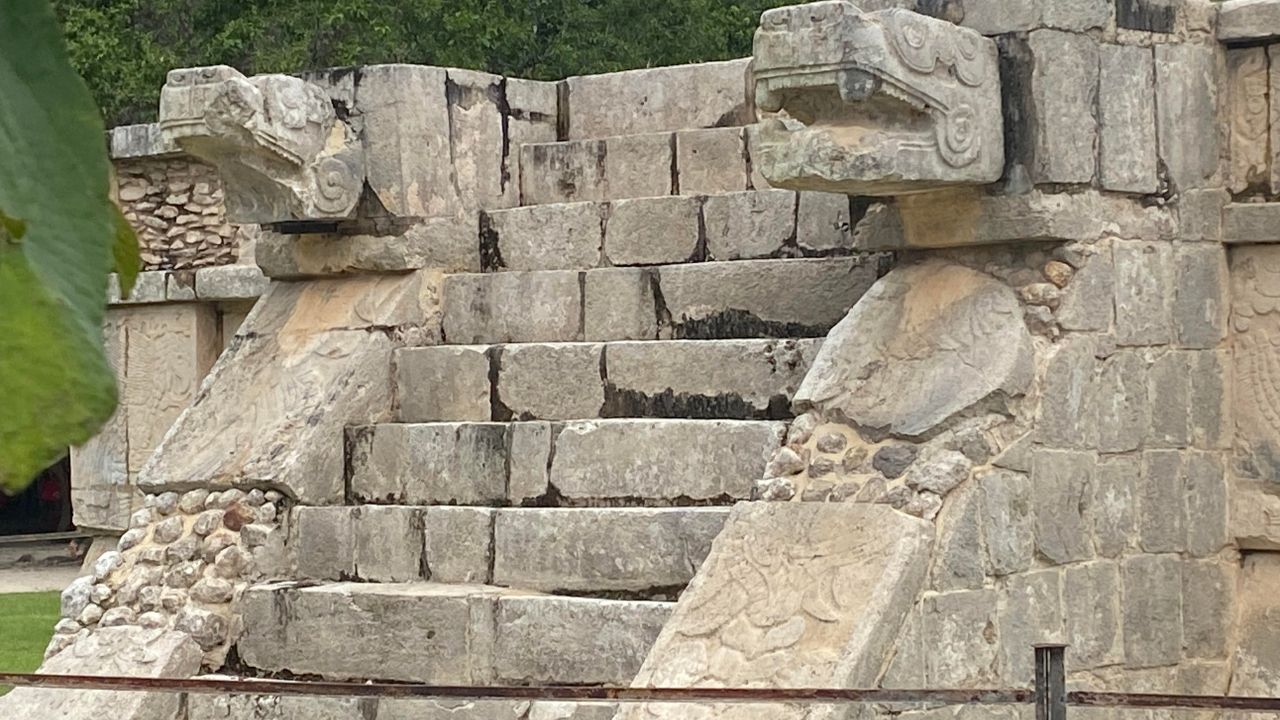
The new “Information Empires” are not unlike those that bedevilled Montezuma, Emperor of the Aztecs, and Hyarima, the Nepuyo Cacique. In a flanking manoeuvre, on 1 December 1699, a party of Carib, Aruac, and Warao ambushed the Spanish Governor José de León y Echales as he approached the mission of San Francisco de los Arenales, neighbouring present-day San Rafael in Trinidad.
The only Spanish military defences at the time were a few soldiers at Puerta de los Hispanoles, and a two-gun battery at the confluence of the Maracas and Caroni rivers called Puerto Grande. The leaders of the rebellion were hanged on 14 January 1700 at San José de Oruña. Their dismembered bodies were put on public display. War is not a military phenomenon. It is not a sacrament, a deific punishment, nor a heroic adventure.
Carl von Clausewitz, in his book “On War,” published posthumously by his wife Marie von Brühl in 1832, states that war is a political tool used to continue policy by other means. Clausewitz, who became the director of the Prussian War College after Napoleon’s final defeat in 1815, concluded that military actions are irrational unless they are aligned with some umbrella or overarching political goal. Clausewitz constructed an alignment hierarchy among long-term policy, medium-term strategy, and short-term tactics. The tactics are rational only if they align with some strategic goal, and the plan is only rational if it is aligned with some eventual political outcome.
Interrogating the Clausewitzian model discloses that maximizing victory in any conflict zone is as short-sighted a goal as maximizing “user engagement” on social media within a market segment. History is replete with decisive military victories that are irreversible political disasters because the tactics and strategies failed to secure durable political achievements. In the New Information Empires, autonomous agents, computational algorithms, predictive analytics, networks, and AI will radically alter the old bureaucratic processes of the old empires, and ultimately the old alignment hierarchies.
Bureaucracy literally means “rule by writing desk.” It is an eighteenth-century term invented in France at a time when officials used a writing desk with drawers – a bureau. The drawer was at the heart of this bureaucratic order, not decision assistance tools, bots, and networks. Bureaucracy solved the retrieval problem. Documents were ordered using a set of small drawers, and knowing which document was filed in which drawer was critical. Algorithms and decision assistance tools are changing these bureaucracies and local government operations in unimaginable ways.
The hope is that these algorithmic technologies will enhance Weberian machine bureaucracy whilst preserving the key public sector virtues of fairness, impartiality, transparency, administrative consistency, and evenness in public administration. Data is the digital gold of the New Information Empires, and computer networks and AI are likely to become far more powerful than any previous human bureaucracy, especially those built around the Ordinances of Discovery, New Settlements, and Pacification which Philip II of Spain established in 1573.
Over the last decade to achieve excellence in service delivery, local government authorities in many jurisdictions have developed state-of-the-art digital information technology infrastructure. These digital architectures can now support autonomous agents, computational algorithms, predictive analytics, and digital assistance tools that can underpin the development of new applications to support efficient citizen-facing digital services.
This shift to algorithmic bureaucracy is having many unforeseen effects on public administration. Autonomous agents and digital assistance tools have become imbricated in delivering friction-free public services. This imbrication is building a new algorithmic bureaucracy that will produce a socio-technical liaison between workers and their tools. This shift will alter the ways that work is planned and managed in the public sector. Moreover, these innovations in service delivery will also create new socio-technical challenges for hybrid life in the infosphere among “inforgs.” New forms of cultural capital will provide the means for new hierarchies in societies as classes distinguish themselves through hybrid and synthetic life, and their interactions with the new algorithmic bureaucracies.
Borough Councils have already started to use resident-facing chatbots for town and country planning permissions. However, some automated services do not target citizens. Rather, the new algorithmic bureaucrats extract, modify, and upload tasks in a variety of local government application areas, such as statutory reporting. These automated assistants for public servants allow the workers to focus on more complex analytical tasks rather than old routine administrative ones.
For Latin America and the Caribbean, the challenge inside the new “Information Empires” is that it will be harder than ever before to guarantee the alignment of algorithmic bureaucrats in the infosphere. One reason the emerging alignment problem is risky is that the decoupling of agency and delegation of authority to digital artefacts in the Age of AI can make these platforms more powerful than any previous human bureaucracy. Networks are not humans and cannot flag misalignments.
As we decouple agency and increase delegated authority in the New Information Empires the alignment problem will loom ever larger. A final concern is pollution in the infosphere in pursuit of user engagement. Even if recommendation algorithms desist from nurturing hate, other instances of the alignment problem can result in larger catastrophes than those we are presently witnessing.
, Fazal Ali · 01 February 2025 -
Next entry · Technology
AI-Crimes in the Silicon Age
It is foreseeable that AI-crimes may create blurred boundaries and legal uncertainties.